A podcast can earn attention without automatically creating business results. The difference is what happens around each episode: how a show reaches its intended audience, continues the conversation, and gives listeners a meaningful next step.
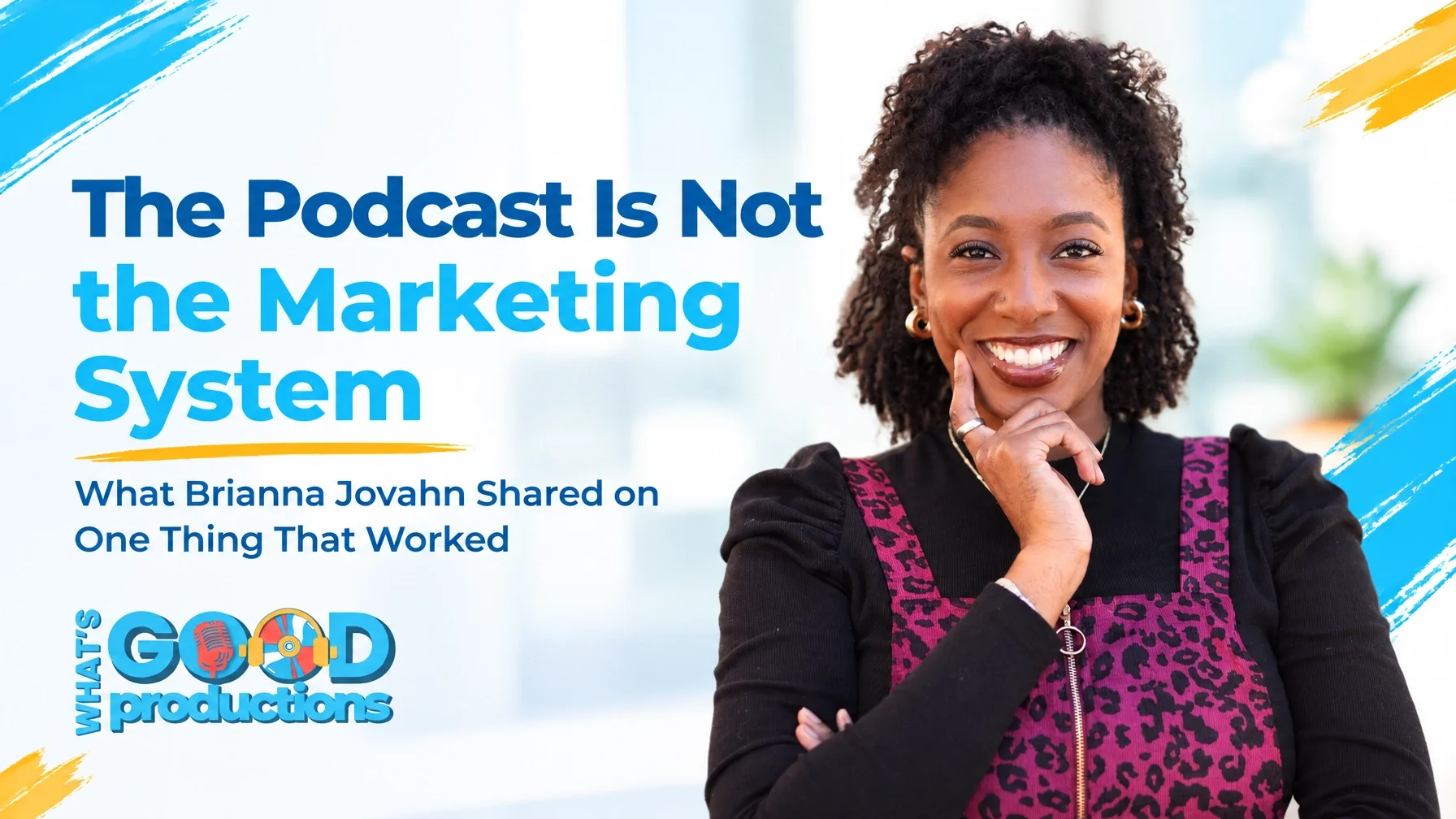
That was the central lesson Brianna Jovahn, founder of What’s Good Productions, shared on Beverly Media’s One Thing That Worked. Watch the full 20-minute episode.
Build the system around the show
“The podcast is not the marketing system. It’s a part of the marketing system,” Brianna explained.
For organizations investing in a branded podcast or b2b podcast, that distinction matters. Publishing an episode is not the same as building a path from attention to action. A show needs to connect to the rest of the organization’s communication and marketing efforts.
Brianna shared how her monthly webinars help continue the conversation beyond her podcast. She also asks clients to consider what they are doing outside the show, such as using a newsletter or webinar to stay connected with their audience. And if a team is publishing episodes but not sharing clips or promoting them, it may be relying on listeners to discover the show by chance.
The strategic question is not only, “What are we publishing?” It is, “How will the right people encounter this, stay connected, and take the next step?”
Choose a specific audience before choosing more topics
A podcast designed to speak to everyone can struggle to become essential to anyone. Brianna’s advice is to focus on one specific person and the problem that person encounters regularly. Solve that problem consistently, and the show has a stronger foundation for building a community and earning a place as a trusted resource.
She uses a podcast survey before a client starts, helping establish who the show is for and what it is meant to address. That work can guide episode topics, positioning, and promotional choices.
The same principle applies to a B2B podcast. Start with the audience’s real questions and challenges. Then shape the show around useful answers, not simply around the topics the organization wants to discuss.
Let the right measure guide the work
In the episode, Brianna described how clients often focus first on download numbers. Her response is to emphasize consistency: podcast performance can change over time, and a single week’s total does not tell the whole story.
Downloads may provide one signal, but they are not a complete measure of business impact. A podcast is intended to serve a larger purpose in an organization’s marketing ecosystem. That means teams should also examine whether their content is reaching the intended audience and supporting the conversations and actions that matter to the business.
Brianna illustrated the value of audience focus through her own show. She rebranded What’s Good Podcast as Dallas, Texas: What’s Good to better anchor the show in the local community. After the change, people began asking to appear as guests. She described growing from that interest by charging for guest spots, and said the show now charts among the top 80 entrepreneurship podcasts in Dallas without thousands of downloads.
The takeaway is not that every show should charge guests or follow the same naming strategy. It is that clear positioning can help the right community recognize that a show is for them.
Turn visibility into a next step
Brianna also shared how she created her own stage after her speaking applications were not accepted: she began hosting monthly webinars. Those events became a way to gather email addresses and connect with potential clients. For free webinars, she recommends keeping the session to no more than 45 minutes and writing the event description with the same care given to a podcast description.
Together, these examples point to a practical framework:
Define the audience: Identify one group and the challenge the show helps address.
Plan for consistency: Build a sustainable publishing rhythm rather than judging the show by a single result.
Extend the conversation: Decide how the podcast connects to webinars, email, clips, or other relevant channels.
Make the next step clear: Give listeners a purposeful way to continue engaging with the organization.
A podcast can create valuable attention. A connected marketing system helps that attention go somewhere.
Watch the full 20-minute episode of One Thing That Worked featuring Brianna Jovahn: https://beverlyen.com/beyourself/brianna-jovahn