
A strong b2b podcast can do more than make your brand recognizable. It can help your company earn trust, open valuable relationships, equip sales teams, and contribute to a measurable pipeline.
That’s the idea behind brandformance: bringing brand-building and performance marketing together in one connected strategy. Instead of asking whether a show is “for awareness” or “for leads,” ask how it can build preference over time and create clear paths to business action.
The distinction matters. A study of 10 B2B branded podcasts, with 511 business decision-makers in the U.S. and U.K., found an average 20% uplift in prompted brand awareness and favorability among exposed audiences. The study found little average movement in consideration or purchase intent. In other words, a podcast can strengthen brand metrics without acting like an immediate-response ad. Read the study details.
The strategic opportunity is to connect that trust-building role to thoughtful measurement and sales activity. Here’s a practical framework.
Brandformance - in four connected stages
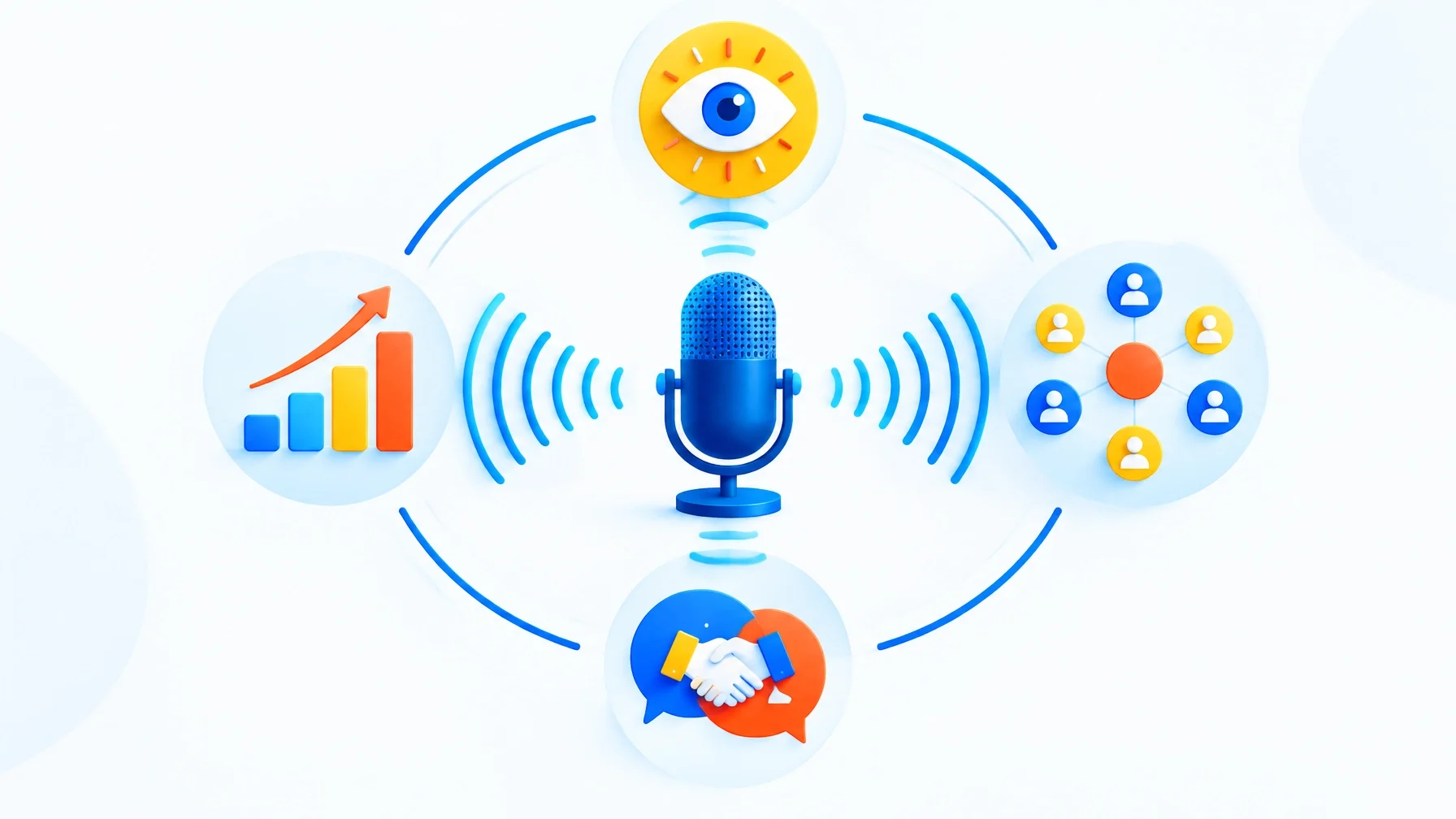
1. Brand: Build authority with the right audience
Start with a defined business audience and a useful point of view. What decisions are your customers navigating? What shifts are they trying to understand? Where can your organization bring clarity?
A business podcast should be valuable before a listener is ready to buy. That is how a company earns a place in the conversations that shape a future purchase.
Measure more than total downloads. Look at:
Reach among priority accounts and roles
Repeat listening and episode completion
Awareness, favorability, and perceived expertise
Branded search and direct traffic as directional signals
A Red Hat case study offers a practical example of measuring brand impact. Its Command Line Heroes podcast reached its intended audience, with six in ten surveyed listeners identifying as software developers or system administrators. In a matched comparison, engaged listeners showed a 29% lift in brand affinity. Explore the case study.
The takeaway is not that every show should expect the same result. It’s that brand impact can be measured more rigorously than impressions alone.
2. Demand: Make the next step easy to track
Trust doesn’t always produce an immediate form fill. Buyers may hear an episode, discuss its ideas internally, and return to your company weeks later. If your measurement depends only on clicks, you will miss some of that influence.
Create useful, low-friction paths from listening to action:
Give episodes relevant landing pages or trackable links.
Invite listeners to a briefing, event, or practical resource.
Ask “How did you hear about us?” on forms and in sales conversations.
Record podcast-related activity in your CRM, including the episode, date, account, and type of interaction.
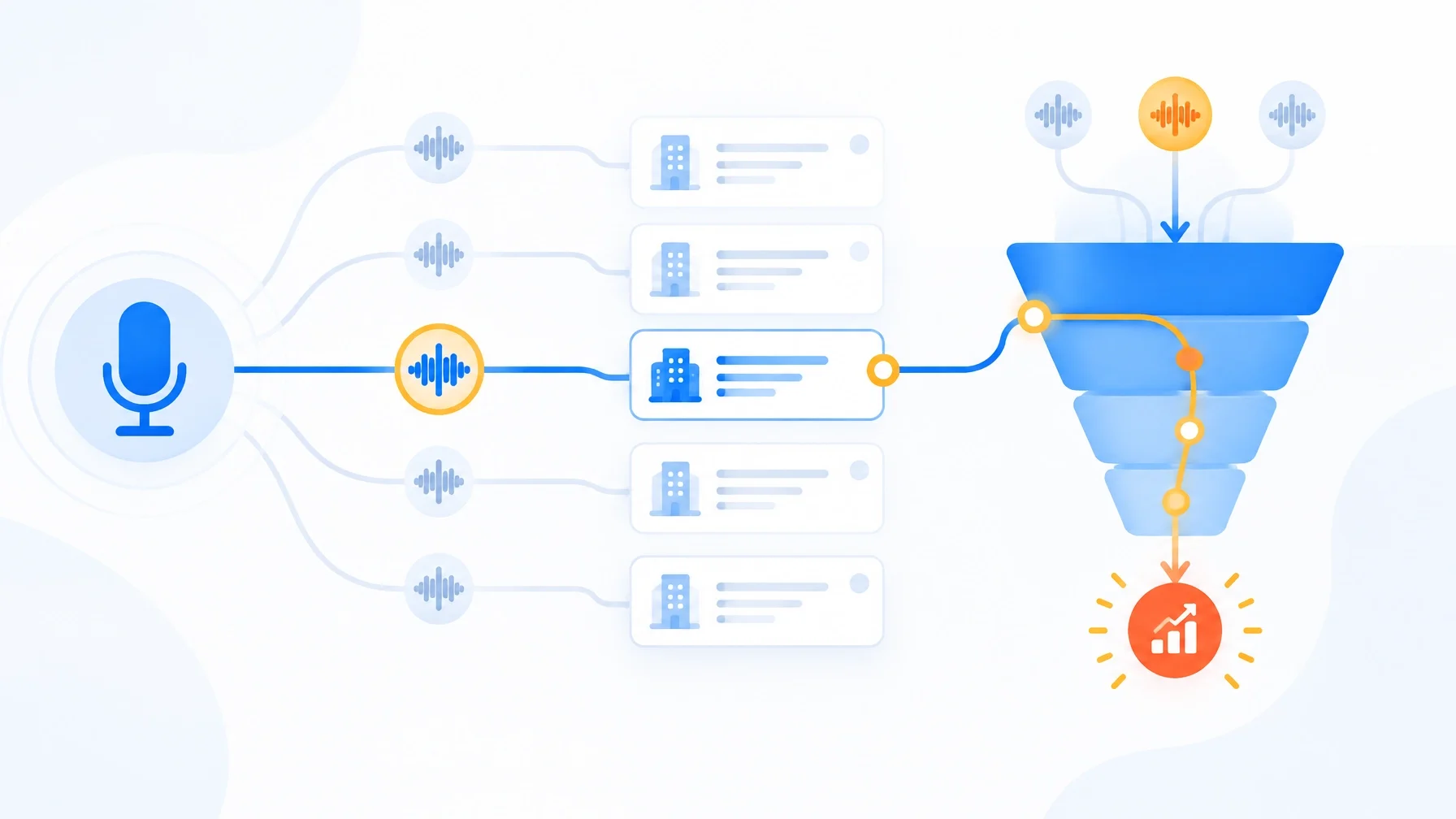
Separate sourced pipeline, where the podcast was the first known or self-reported source, from influenced pipeline, where a verified podcast touch occurred during the buyer journey. Both views can be useful, but they answer different questions.
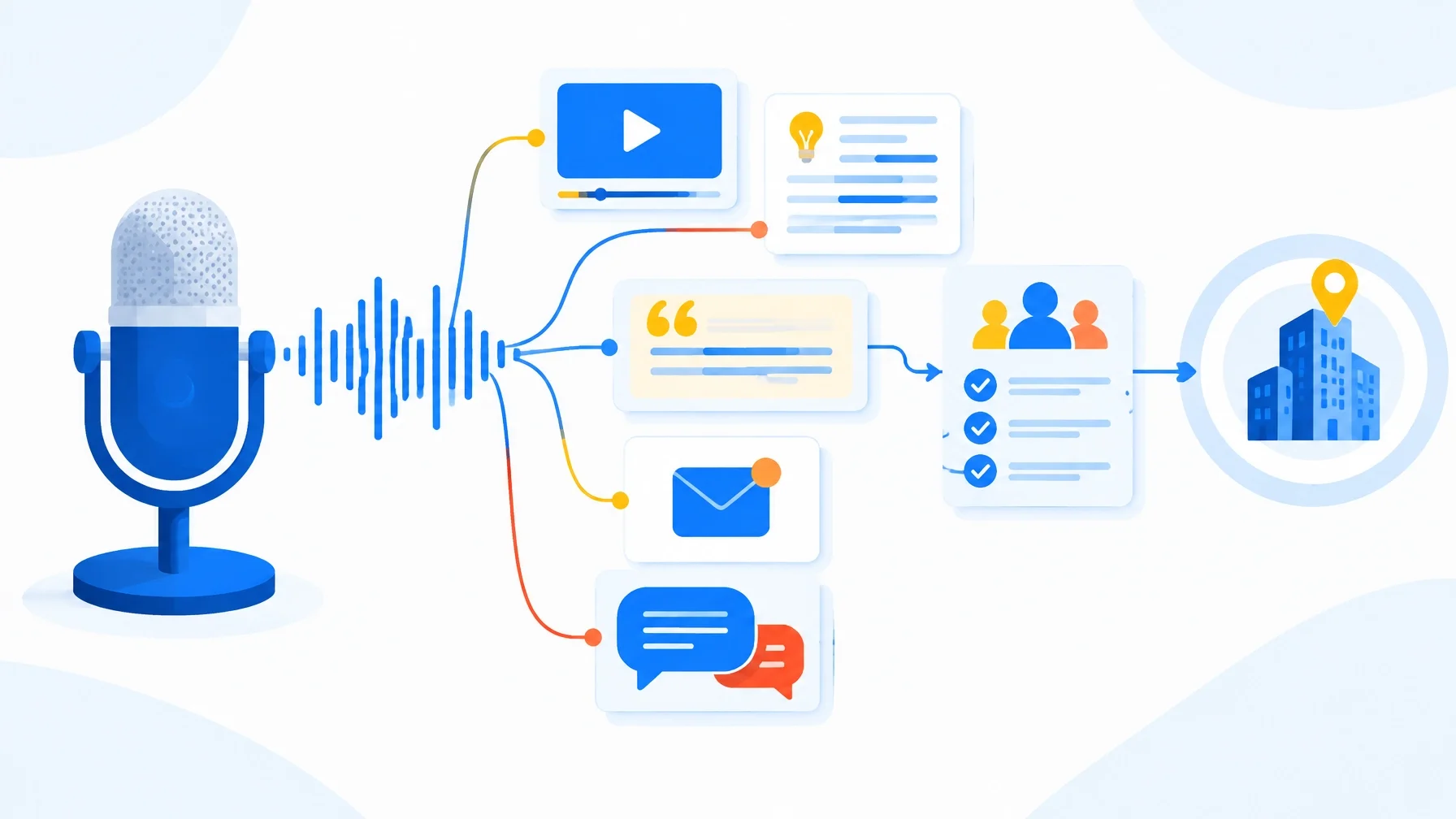
3. Sales enablement: Turn episodes into useful tools
A published episode is not the finish line. It is the raw material for a library of assets that can support marketing and sales.
Turn each conversation into selected clips, a written summary, key quotes, an email, or a short insight sheet. Then organize those assets around customer problems, buyer roles, and sales stages. A focused clip that answers a prospect’s question may be more useful than sending an entire episode.
Guest strategy can also create meaningful access. Inviting a relevant executive, customer, or industry expert gives your team a reason to start a thoughtful conversation. The guest experience should be valuable on its own, not a disguised sales pitch.
Track whether sales teams use the material and whether that use corresponds with stronger buyer engagement. For example:
Which episodes or clips do sales teams share?
Do podcast-related conversations lead to accepted meetings?
Do engaged opportunities progress through stages differently?
Are buyers referencing the show or its ideas in discovery?
A corporate podcast becomes more commercially useful when its best insights are easy to find, share, and apply.
4. Pipeline: Connect influence to business outcomes
Use your CRM to record what happens to accounts and opportunities. Track podcast touches alongside stage progression, opportunity creation, deal velocity, win rate, and closed revenue.
Keep the categories clear:
Sourced pipeline: The podcast was the first known or self-reported source.
Influenced pipeline: A verified podcast interaction occurred during the buying journey.
Incremental impact: A comparison with a suitable control or matched group suggests additional lift.
Attribution is not the same as causation. A multi-touch report can help your team understand tracked journeys, but it cannot capture every untracked listen or prove the podcast caused a sale. For stronger evidence, compare similar account groups or use a holdout where practical.
Review leading indicators monthly, such as target-account engagement and sales usage, and assess pipeline and revenue over a period that reflects your sales cycle. Publish the time window and definitions behind your numbers. Credibility is part of the business case.
Put the framework to work
Before launching or scaling a b2b podcast, align the team on three questions:
Who do we need to influence? Define priority accounts, roles, and the business challenge the show will address.
What should the audience come to trust us for? Build an editorial point of view that is distinctive, useful, and connected to your expertise.
How will we recognize progress? Agree on brand indicators, account-level touchpoints, sales-enablement measures, and pipeline definitions before publishing.
Then build a repeatable operating rhythm: publish consistently, distribute each episode across relevant channels, equip sales with usable excerpts, and review performance with marketing and revenue teams.
A podcast is not a shortcut to pipeline. It is a long-term platform that can make your expertise more visible, your relationships more human, and your sales conversations more informed. The business case becomes stronger when those benefits are connected to clear touchpoints and honest measurement.
For more guidance, explore our podcast KPI framework and branded podcast strategy. If your organization is ready to build a show around measurable business goals, learn about What’s Good Productions’ podcast development and growth services.
Invest in authority. Design for action. Measure the full journey. A b2b podcast built with that discipline can strengthen your brand while giving your pipeline more ways to move.