Beyond the 'Podfade': The Single Biggest Reason Most Shows Never Reach Episode 10
The barrier to entry for podcasting has never been lower. With a smartphone and a quiet room, anyone can hit "record" and push a voice to the global stage. For businesses and thought leaders, this ease of access is a double-edged sword. While it democratizes authority, it also creates a graveyard of abandoned projects.
In the industry, we call it "Podfade."
Statistically, the numbers are sobering. Approximately 90% of podcasts do not make it past their third episode. Of the survivors, another 90% "fade" before they reach episode 20. The "Episode 10 Cliff" is the most common point of failure for corporate and high-level branded shows. It’s the moment where the initial excitement of the launch meets the cold reality of consistent production.
But why does this happen to even the most seasoned executives and brilliant brands? It isn't a lack of talent or a lack of things to say. It is a fundamental lack of Strategic Architecture.
The Illusion of the "Simple" Podcast
Many organizations approach podcasting as a creative hobby rather than a strategic business asset. They focus on the microphone, the guest list, and the "vibe." But a podcast is not just a conversation; it is a recurring media operation.
When a show fails before episode 10, it’s usually because the host or the team underestimated the invisible workload. Between recording, professional editing, show notes, promotional assets, and distribution, a "simple 30-minute chat" can easily balloon into ten hours of labor. For a busy executive or a lean marketing team, that is a recipe for burnout.
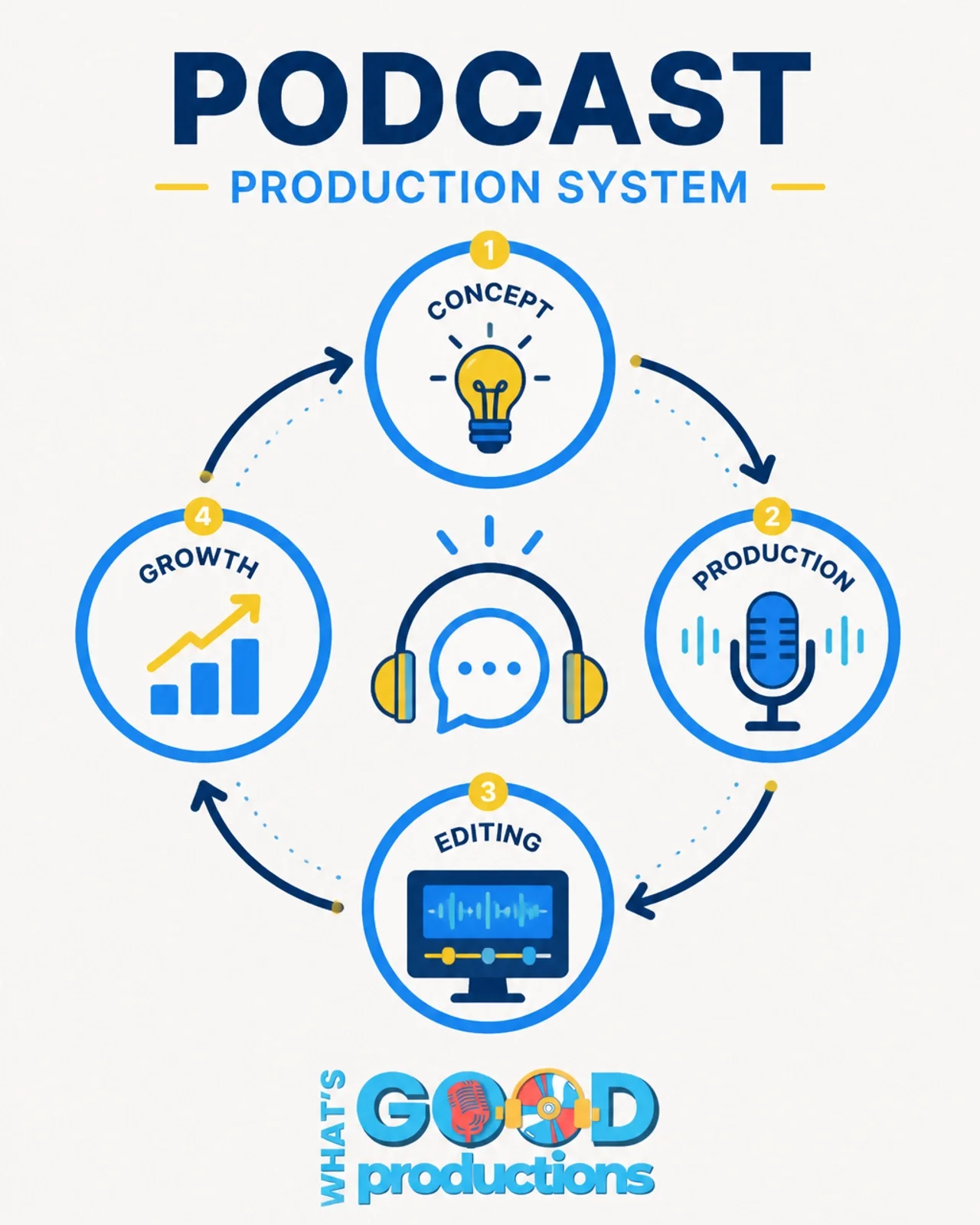
To survive the podfade, you must shift your perspective from creating content to building a system.

Reason #1: You Didn't Build for Longevity
The single biggest reason most podcasts die early is that they were built on enthusiasm rather than infrastructure.
When you launch with intention, you aren't just thinking about the first three guests. You are looking at the next twelve months. Successful shows- those that drive real brand authority and ROI- are designed with a "sustainable floor."
1. Strategic Architecture Over Creative Whims
At What’s Good Productions, we believe in Strategic Podcast Architecture. This means defining the "Why" before the "What." If your goal is lead generation, your show structure should look very different than a show designed for internal HR communications or executive thought leadership. Without this clarity, you'll find yourself at episode 7 wondering why you’re doing this at all.
2. The Power of Systems
If your production process requires you to be a "hero" every week, it will fail. Longevity requires a repeatable workflow that doesn't rely on your mood or your free time. This includes:
Batch Recording: Recording 3–4 episodes in a single block to stay ahead of the schedule.
Standardized Checklists: Ensuring every episode meets the same high-quality bar without reinventing the wheel.
Professional Enablement: Handing off the technical friction (editing, engineering, and distribution) to a dedicated team.
Shifting the Goalposts: ROI vs. Ego Metrics
Another reason for the Episode 10 Cliff is "Metric Despair." Many leaders look at download counts in the first month and feel like they are shouting into a void. However, for B2B podcasts and thought leadership, downloads are often a vanity metric.
If you are an executive in a niche industry, ten downloads from the right ten CEOs are worth more than 10,000 downloads from a generic audience. You must track the KPIs that actually matter. Are you gaining invited speaking opportunities? Are your sales conversations being shortened because prospects already trust your voice? Is your internal culture becoming more aligned?
When you align your show with your business sales funnel, the motivation to continue becomes financial and strategic, not just emotional.

How to Outlast 99% of Your Competition
If you can make it to episode 21, you are already in the top 1% of all podcasts ever created. Here is how to ensure you get there:
Evaluate Your Content Bank
Before you even record your trailer, you should have a list of 25–50 episode topics. This ensures that you aren't scrambling for ideas when a busy week hits. These topics should be rooted in your brand's unique insights and the real-world problems your audience faces.
Invest in Authority
High-level decision-makers have a low tolerance for poor audio quality or disorganized thoughts. If your podcast sounds amateur, it reflects on your brand. Investing in professional production isn't just about "sounding good"; it’s about protecting your brand equity.
Focus on Resonance Over Reach
Don't try to be for everyone. The most successful podcasts for businesses are those that lean into a specific niche with high-value insights. As we discuss in our Executive's Guide to Intentional Growth, resonance creates loyalty, and loyalty prevents podfade.

The What’s Good Productions Difference
The "Podfade" is a structural problem, and it requires a structural solution. What’s Good Productions was built to solve this exact crisis. We don't just "edit audio"; we partner with organizations to build the architecture, systems, and promotional strategies that make podcasting sustainable and impactful.
We help you move past the technical hurdles and the "what do I talk about?" anxiety, so you can focus on what you do best: leading your industry. Whether it’s creative direction, end-to-end production, or team enablement, we provide the structure and support your show needs to thrive long after episode 10.
Next Steps for Your Brand
Evaluate your current strategy- or the one you’re planning to launch. Ask yourself:
Do I have a system that can run without me for two weeks?
Is my show's success tied to downloads or to business goals?
Am I treating this as a project or as a platform?
If you're ready to build a show that doesn't just survive but scales your influence, let's talk about the architecture of your success.
Don't become a statistic. Build with intention.