
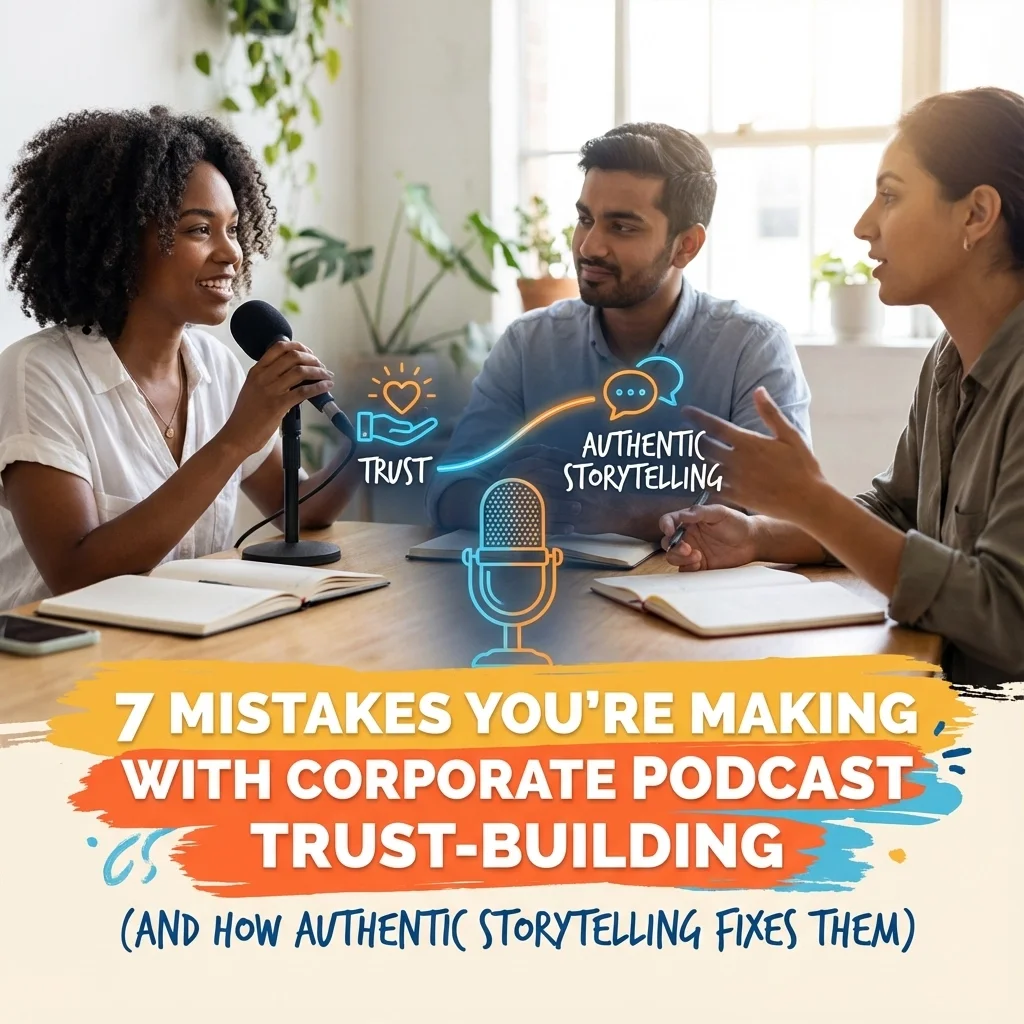
7 Mistakes You're Making with Corporate Podcast Trust-Building (And How Authentic Storytelling Fixes Them)
Let's be real for a second, corporate podcasts have a trust problem.
You know what I'm talking about. Those polished, squeaky-clean episodes that sound like they were written by a committee and approved by legal. The ones where executives share "challenges" that always end with their company looking like a hero. Where vulnerability feels scripted, and authenticity feels... well, fake.
Here's the thing: Your audience can smell manufactured authenticity from a mile away. And when they do? Trust goes out the window faster than you can say "brand reputation."
But guess what? I've seen corporate podcasts that actually do build genuine trust. The secret sauce? They've stopped making these seven critical mistakes and started embracing authentic storytelling instead.
Ready to transform your corporate podcast from a trust-killer into a trust-builder? Let's dive in! 🚀
Mistake #1: Pretending Everything Is Always On Track
This is the big one, friends. The biggest trust-killer in corporate podcasting is acting like your company never misses deadlines, never breaks promises, and never has setbacks.
You know those episodes where leaders talk about "pivots" and "learnings" but never actually admit they screwed up? Yeah, your audience sees right through that corporate-speak.
Here's what happens in your listeners' minds: "If they can't even admit when they miss a deadline, how can I trust anything else they're saying?"
The Authentic Storytelling Fix:
Start the conversation by explicitly acknowledging what went wrong. I'm talking about real, specific failures: not vague references to "challenges."
Instead of: "We've learned a lot about project management this quarter."
Try: "I need to be honest with you: we completely missed our Q3 launch deadline. We promised our customers something we couldn't deliver, and that's on me. Here's exactly what happened and what we're doing differently..."
That vulnerability? That's where trust begins. 💯

Mistake #2: Being Mysterious About Your "Why"
Look, I get it: sometimes you genuinely can't share all the details: legal constraints, confidentiality agreements, and competitive reasons. But here's where most corporate podcasts fall short: they share partial information without explaining why they're selective.
This creates confusion and suspicion. Your audience starts wondering what you're hiding and whether your motives are as pure as you claim.
The Authentic Storytelling Fix:
When you can't share details, be transparent about your motives and intentions instead.
Try something like: "I can't discuss the specifics of our merger talks due to SEC regulations, but I can tell you exactly why we're considering this partnership and how it aligns with our mission to..."
See the difference? You're not hiding behind corporate secrecy: you're explaining the constraints while sharing your authentic reasoning.
Mistake #3: Confusing Trust With Feeling Safe
This one's subtle but so important. Many corporate leaders think, "My team trusts our strategy, so they must feel comfortable speaking up in meetings."
Wrong. 🚨
Research shows these are completely different things. People can deeply trust your organization's direction while still feeling unsafe voicing dissenting opinions or admitting their own mistakes.
The Authentic Storytelling Fix:
Use your podcast to model the vulnerability that creates psychological safety. Share your own struggles, doubts, and learning moments.
Don't just say: "We value diverse perspectives."
Try: "Last week in our leadership meeting, I completely misread the market data. Sarah, on our team, had to correct me, and honestly, it wasn't very comfortable. But you know what? That's exactly the kind of honesty that makes us stronger..."
When you show that mistakes are learning opportunities, not career-killers, you create space for real dialogue.
Mistake #4: Inconsistent Communication (AKA Being a Podcast Ghost 👻)
One-off episodes don't build trust. Neither do sporadic releases nor long gaps between communications. Trust is built through consistent, reliable interaction over time.
If your corporate podcast shows up whenever it's convenient, your audience will treat your messages the same way: as convenient, not essential.
The Authentic Storytelling Fix:
Develop a consistent cadence and stick to it. But more importantly, use each episode to build on previous conversations.
Reference what you've shared before. Come back to promises you've made. Follow up on stories you've started. Make your podcast feel like an ongoing conversation, not a series of disconnected announcements.

Mistake #5: Broadcasting Instead of Engaging
There's a huge difference between showing up and being genuinely present. Many corporate podcasts sound like leaders delivering prepared remarks rather than having real conversations.
Your audience can tell when you're going through the motions versus when you're actually considering their perspectives and concerns.
The Authentic Storytelling Fix:
Use storytelling to demonstrate that you're genuinely listening and adapting. Share how feedback or conversations have changed your thinking.
"After our last episode about remote work policies, three of you reached out with concerns I hadn't considered. Maria from accounting helped me realize that our 'flexibility' policy actually created more stress for parents. Here's how we're adjusting..."
This shows you're not just broadcasting: you're in dialogue.
Mistake #6: Never Admitting Your Own Mistakes
When leaders never share their failures or learning moments, they create distance. You either seem infallible (which feels fake) or completely out of touch (which feels disconnected).
Neither builds trust.
The Authentic Storytelling Fix:
"Go first" by openly discussing mistakes that taught you valuable lessons. When you model accountability through real stories, you give others permission to be equally honest.
Share the story of the product launch that flopped because you ignored customer feedback. Discuss the hiring decision that didn't work out because you prioritized credentials over cultural fit. Be specific about what you learned and how it changed your approach.
Your authenticity gives others permission to be human too.
Mistake #7: Protecting Your Image Over Building Relationships
Here's the paradox: The more you try to protect your reputation in the moment, the more you damage trust in the long run.
Most corporate podcasts are terrified of saying anything that might make the company look bad. So they sanitize every story, polish every anecdote, and remove any hint of genuine struggle.
The Authentic Storytelling Fix:
Use storytelling to show the long view. Frame setbacks as part of your growth story rather than threats to your image.
"Five years ago, we made a decision that nearly killed our company culture. It was brutal to live through, but it taught us something essential about leadership that still guides us today..."
This approach builds deeper, more resilient trust than any polished narrative ever could.
When you're willing to be vulnerable about the journey, people trust you with their own journeys too. ✨

The Bottom Line: Stories Build Bridges, Scripts Build Walls
Here's what I want you to remember: Authentic storytelling creates trust where corporate messaging cannot.
Real stories about challenges, failures, and genuine growth demonstrate competence, reliability, and character far more effectively than scripted excellence ever will.
Your audience doesn't need you to be perfect: they need you to be real. They want to see that you learn from mistakes, that you listen to feedback, and that you're committed to growth over image protection.
So here's your challenge: In your next podcast episode, share one story you've been avoiding because it doesn't make you look perfect. Share the struggle, the learning, and the growth that came from it.
Watch what happens to the comments, the engagement, and the trust level. I bet you'll be amazed. 🔥
Ready to transform your corporate podcast into a genuine trust-building machine? Let's talk about how authentic storytelling can revolutionize your approach.
Because when you stop trying to sound like every other corporate podcast and start sounding like you: that's where the magic lives. ✨
What story have you been avoiding telling? Drop a comment below( I'd love to hear about it!)